Key Takeaways
- A legitimate roofing estimate should contain at least 14 distinct line items - not a single lump sum
- The hidden-but-required items (underlayment type, ice and water shield coverage, drip edge) are the most common places bad bids cut corners
- Payment schedule and change-order language tell you more about a contractor than the bottom-line price
- Side-by-side comparison only works when every estimate is normalized to the same line-item structure
Two contractors look at the same roof in Auburn. One hands you a single line - "Remove and replace roof: $12,500" - on a half sheet of paper. The other hands you a two-page estimate that itemizes the underlayment, the ice-and-water shield footage, the flashing, the disposal, and the ventilation. Same roof. The difference isn't the price. It's that one of them is telling you what you're actually buying and the other is hoping you won't ask.
A roofing estimate is the single best document you have for judging a contractor before any work happens. A vague estimate isn't just inconvenient - it's where the corners get cut, because anything that isn't written down isn't promised. This guide breaks down the 14 line items a legitimate Indiana roofing estimate should contain, what each one means, and exactly what to flag when it's missing.
Quick Answer: What should a roofing estimate include?
A legitimate roofing estimate should itemize: tear-off scope, decking inspection/replacement terms, underlayment type, ice-and-water shield coverage, drip edge and flashing, starter and ridge cap, the shingle or panel product and color, ventilation, nailing pattern, disposal/dumpster, labor, cleanup, the warranty terms, and a clear payment schedule. If it's a single lump-sum number with no breakdown, you can't verify what you're paying for - and you can't compare it to another bid.
Estimate vs quote vs proposal: the legal difference matters
People use these three words interchangeably, but they aren't the same thing, and the difference can cost you.
- Estimate: an educated approximation of cost. It can legitimately move if the scope changes (for example, hidden rot is discovered) - but a good estimate still itemizes everything it's based on, so you can see why any change happened.
- Quote: typically a firmer, fixed price for a defined scope of work. A quote that doesn't define the scope isn't really fixing anything.
- Proposal: the full document - scope, materials, price, terms, and warranty - that becomes the basis of your contract. This is what you actually want before signing.
The label on the page matters less than what's inside it. A document called an "estimate" that itemizes scope and materials is far more protective than a "quote" that's just a number. What you're looking for, whatever it's titled, is detail you can hold the contractor to.
The 14 line items a legitimate shingle estimate must contain
Here's the checklist. Lay your estimate next to this list and check off what's actually there. Every missing item is a question you should ask before signing.
- Tear-off scope - how many existing layers are being removed, and down to what (deck or overlay). "Tear off to the deck" is very different from "overlay."
- Decking inspection and replacement terms - what happens if rotten plywood is found, and the per-sheet price to replace it. (Skyline includes the first two sheets of decking replacement on every job, then itemizes any beyond that.)
- Underlayment - the specific product and type (synthetic vs. basic felt). This is a top corner-cutting spot.
- Ice-and-water shield - where it's applied (eaves, valleys, penetrations) and how much. Critical in Indiana for ice-dam protection.
- Drip edge / edge metal - new metal around the full perimeter. Reusing old or skipping it is a red flag.
- Starter shingles - the manufacturer's starter course (not cut-up field shingles), which affects the wind warranty.
- Flashing - new step, counter, and penetration flashing around chimneys, walls, and vents, plus sealant.
- Shingle product and color - the exact line (e.g. Owens Corning Duration), not just "architectural shingle."
- Ridge cap - manufacturer ridge cap shingles, which also tie into warranty and ventilation.
- Ventilation - intake and exhaust (ridge vent, box vents). Required to keep most manufacturer warranties valid.
- Nailing pattern - 4-nail vs. 6-nail. The 6-nail high-wind pattern is what qualifies many shingles for their top (130 mph) wind rating.
- Disposal / dumpster - debris removal and dump fees, itemized, so you know they're included.
- Labor and cleanup - including a magnet sweep for nails. Skyline runs a final industrial magnet sweep on every job.
- Warranty terms and payment schedule - the material and workmanship warranties spelled out, and a clear deposit/progress/final payment structure.
The 14-item test
If your estimate is missing five or more of these, it's not a detailed bid - it's a placeholder. That doesn't always mean the contractor is dishonest, but it does mean you can't verify the scope, you can't compare it fairly to another bid, and you have no written protection if they cut a corner. Ask for the itemized version before you go further.
Underlayment, ice and water shield, drip edge: the hidden-but-required items
These three are grouped together because they share a trait: you can't see any of them once the roof is finished, which makes them the easiest place to cut cost without the homeowner noticing - until there's a leak.
Underlayment is the layer between your deck and your shingles. A synthetic underlayment is tougher, lays flatter, and holds up better than old-style 15-lb felt. Ice-and-water shield is a self-sealing membrane that goes along eaves, in valleys, and around penetrations - the exact spots where Indiana's freeze-thaw cycle drives water backward under shingles during an ice dam. Drip edge (edge metal) directs water off the roof edge into the gutter instead of behind it, where it rots fascia. A bid that doesn't name the underlayment type, doesn't specify where the ice-and-water shield goes, or assumes you'll reuse old drip edge is quietly lowering its own cost at your future expense.
Tear-off, disposal, and dumpster fees: who pays and how it's itemized
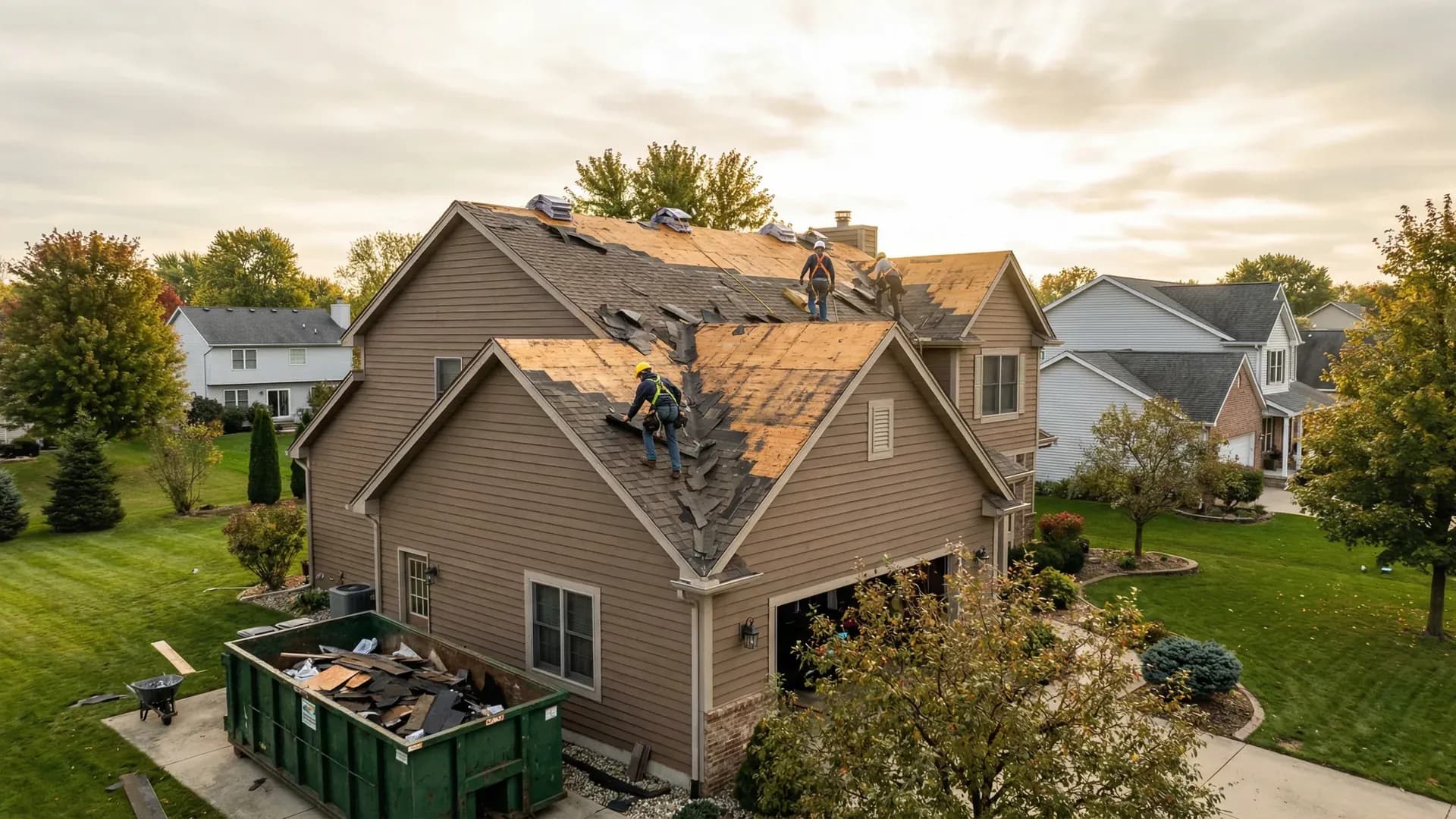
Tearing off an old roof generates a surprising amount of weight, and getting it to the dump costs real money. A legitimate estimate accounts for it as a line item so there are no surprises. The two things to verify: first, that disposal is included (not a "plus dump fees" footnote that shows up later), and second, that the tear-off scope is specified - one layer or two, and whether they're going down to the deck. A roof being torn to the deck lets the crew inspect and replace bad plywood; an overlay buries any problems underneath the new layer.
Labor vs material splits and why vague ones are suspicious
A good estimate makes it possible to see, at least at a high level, how the price splits between materials and labor. You don't need a forensic accounting - but if the entire job is one blended number with no breakdown, you've lost the ability to sanity-check anything. Two questions a labor/material split answers instantly: are they using a premium product or a builder-grade one, and is the labor priced like a trained crew or a rock-bottom subcontractor? Vague blending hides both. It's also how a lowball bid disguises that it's using the cheapest possible materials - the bottom line looks competitive because the materials behind it aren't.
Change-order language: what happens when they find rot
On a tear-off, the crew sometimes finds rotten decking, a hidden chimney leak, or framing damage that nobody could see until the old roof came off. This is normal. What separates a trustworthy contractor from a predatory one is how the estimate handles it before it happens.
- A clear per-unit price for decking replacement (e.g. a set price per sheet of plywood) so you're never surprised by the cost of a fix.
- A requirement that additional work is approved by you in writing before it's done - not added to the invoice after the fact.
- Photo documentation of the problem so you can see what you're paying to fix. (Skyline documents jobs with drone photos before and after.)
Quick Answer: Why are some roofing estimates vague?
Usually one of three reasons: the contractor wants flexibility to substitute cheaper materials after you sign, they're hiding that disposal or decking costs will be added later, or they simply don't operate with documented systems. A vague estimate benefits the contractor and exposes the homeowner - the detail protects you, not them.
Payment schedule: deposits, progress payments, and final
The payment schedule tells you how a contractor runs their business. A reasonable structure is a modest deposit to schedule and order materials, with the balance due on completion (larger commercial jobs may add a progress payment in the middle). What should make you pause is a demand for a large share of the total up front before any materials arrive or any work begins - that's a cash-flow risk for you and a classic warning sign. Pay by a method that leaves a paper trail, and never pay the final balance until you've done a walkthrough and you're satisfied.
What Skyline's estimate looks like
Our estimates are built to be read, not just signed. Every Skyline shingle estimate itemizes the system you're getting - the shingle line and color, synthetic underlayment, ice-and-water leak protection at the eaves and valleys, new edge metals around the full perimeter, painted trim-coil flashing with counter-flashing and lifetime sealant, ventilation, the 6-nail high-wind installation with Owens Corning starter shingles, and the warranty tier (Basecamp, Ascent, or Summit). It spells out that the first two sheets of decking replacement are included, with a clear price beyond that, and it ends with the warranty terms and payment schedule in writing.
Want to see a sample estimate?
We're putting together an annotated sample line-item estimate you can use as a reference sheet against any bid. Ask Hector for the current version when you book your free assessment - it makes comparing three contractors a lot faster.
How to compare 3 estimates side-by-side
Three estimates almost never match line for line, which is exactly why comparing bottom-line numbers is a trap. Normalize them first. Put the contractors across the top of a grid and the 14 line items down the side, then fill in what each bid actually includes. The moment you do this, the differences jump out: one bid skipped new drip edge, another blended labor and materials into one number, a third quoted a cheaper underlayment. Now you're comparing the same roof three ways instead of three different roofs.