Key Takeaways
- Average roof replacement in Northeast Indiana costs $8,000-$15,000 for a typical home
- Material choice is the biggest cost factor — shingles start at $4/sq.ft., metal at $9/sq.ft.
- Roof complexity (steep pitch, multiple valleys, dormers) increases labor costs significantly
- Always get itemized written estimates — not just a lump sum — to compare contractors fairly
"How much will a new roof cost?" It's the first question every homeowner asks, and the honest answer is always the same: it depends. A small ranch in Kendallville with a simple roofline might run $8,500. A two-story colonial in Goshen with multiple valleys and dormers could hit $25,000 or more. The variables are real, but they're also predictable - and that's what this guide is for.
Skyline Roofing Systems provides free roof estimates across Noble, DeKalb, Whitley, Elkhart, Kosciusko, LaGrange, and Steuben counties. We've priced hundreds of projects in this region, so the numbers below reflect what homeowners in northeast Indiana actually pay - not national averages pulled from a database somewhere.
Quick Answer
The average roof replacement in northeast Indiana costs $10,000 to $18,000 for asphalt shingles on a typical 1,500–2,500 sq ft home. Metal roofing runs $18,000 to $30,000+ for the same size home. Final price depends on roof size, pitch, material, and job complexity.
Roof Replacement Cost by Material
Material selection is the biggest single factor in your roof replacement cost. Here's what each option costs installed in our service area as of 2026. These figures include materials, labor, tear-off of the existing roof, and basic cleanup.
2026 Roof Replacement Costs in Northeast Indiana (1,500–2,500 sq ft home)
| Roofing Material | Price Range (Installed) | Avg. Lifespan | Best For |
|---|---|---|---|
| 3-Tab Asphalt Shingles | $7,000–$11,000 | 15–20 years | Budget-conscious, rental properties |
| Architectural Shingles | $10,000–$16,000 | 25–30 years | Most residential homes (best value) |
| Premium/Designer Shingles | $14,000–$22,000 | 30–50 years | Upscale homes, specific aesthetics |
| Steel/Metal Panels (exposed fastener) | $14,000–$22,000 | 40–60 years | Barns, outbuildings, budget metal |
| Standing Seam Metal | $20,000–$32,000 | 50–70 years | Long-term homes, premium durability |
| TPO/EPDM (low-slope) | $8,000–$16,000 | 15–30 years | Flat or low-slope sections |
These ranges cover most residential projects we handle. Your specific price will depend on the factors we'll break down below. And yes, we've seen outliers on both ends - small garage re-roofs under $4,000 and large complex homes over $35,000.
What Drives Roof Replacement Cost Up (or Down)
Two homes on the same street can get wildly different quotes. Here's why.
1. Roof Size and Square Footage
Roofers price by the "square" - a 10×10-foot area, or 100 square feet. A typical 1,800 sq ft ranch-style home has roughly 20–24 squares of roof area (the roof footprint is larger than the living space because of overhangs and pitch). More squares means more material and more labor hours. Straightforward math.
2. Roof Pitch (Steepness)
A steeper roof is harder and slower to work on. Pitches above 8/12 require special safety equipment and take longer to install. A walkable 4/12 pitch keeps costs lower. Many older homes in Kendallville and Auburn have moderate pitches that don't add significant cost, but the steep Victorian-era homes in some downtown areas definitely do.
3. Tear-Off and Deck Condition
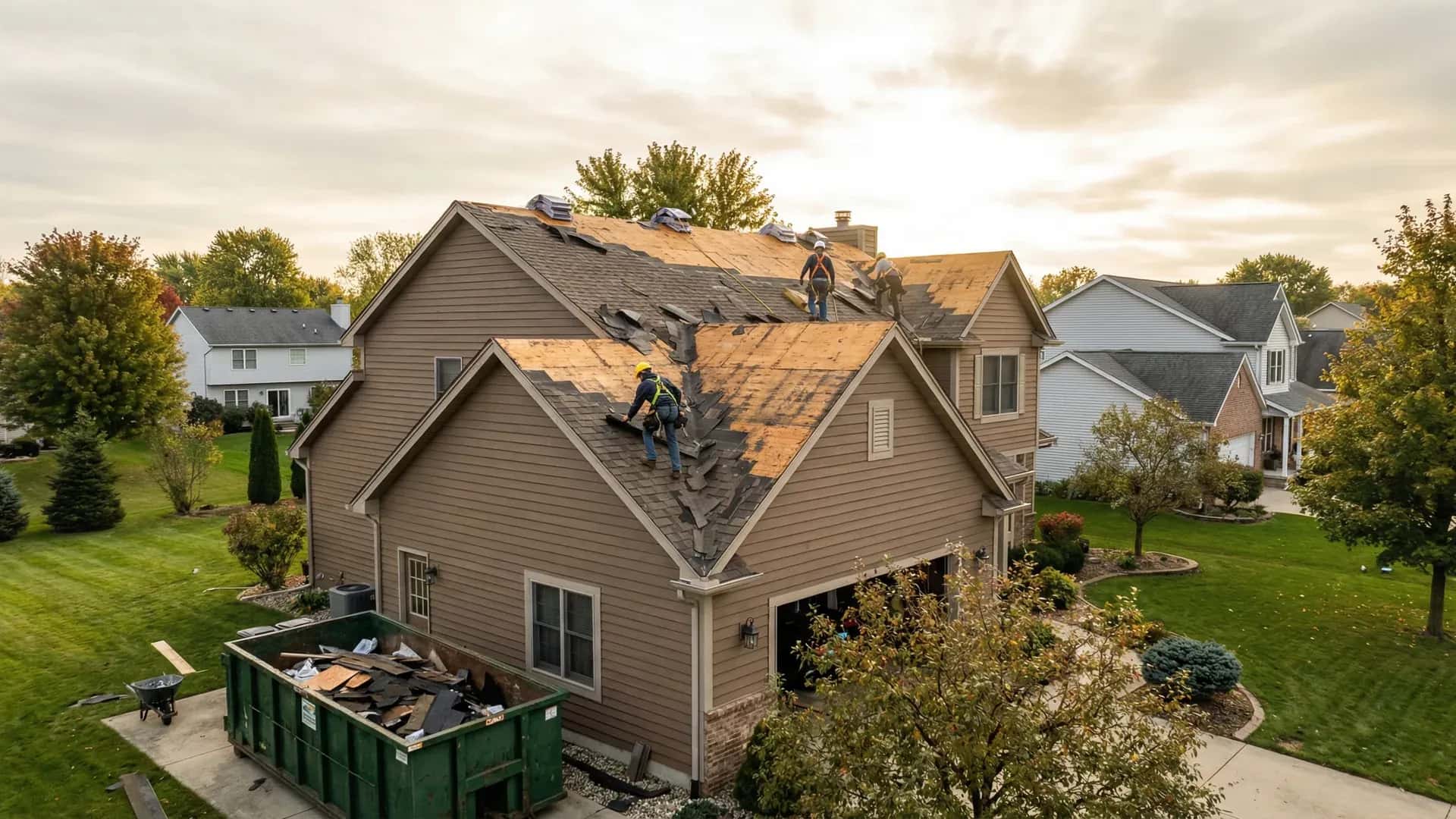
Most roof replacements include tearing off the existing roofing down to the deck. If your home has two or three layers of old shingles, removal takes longer and costs more - typically $1,000 to $2,500 extra depending on the number of layers and the roof size. Indiana building code limits you to two layers of shingles maximum, so if you already have two layers, tear-off isn't optional.
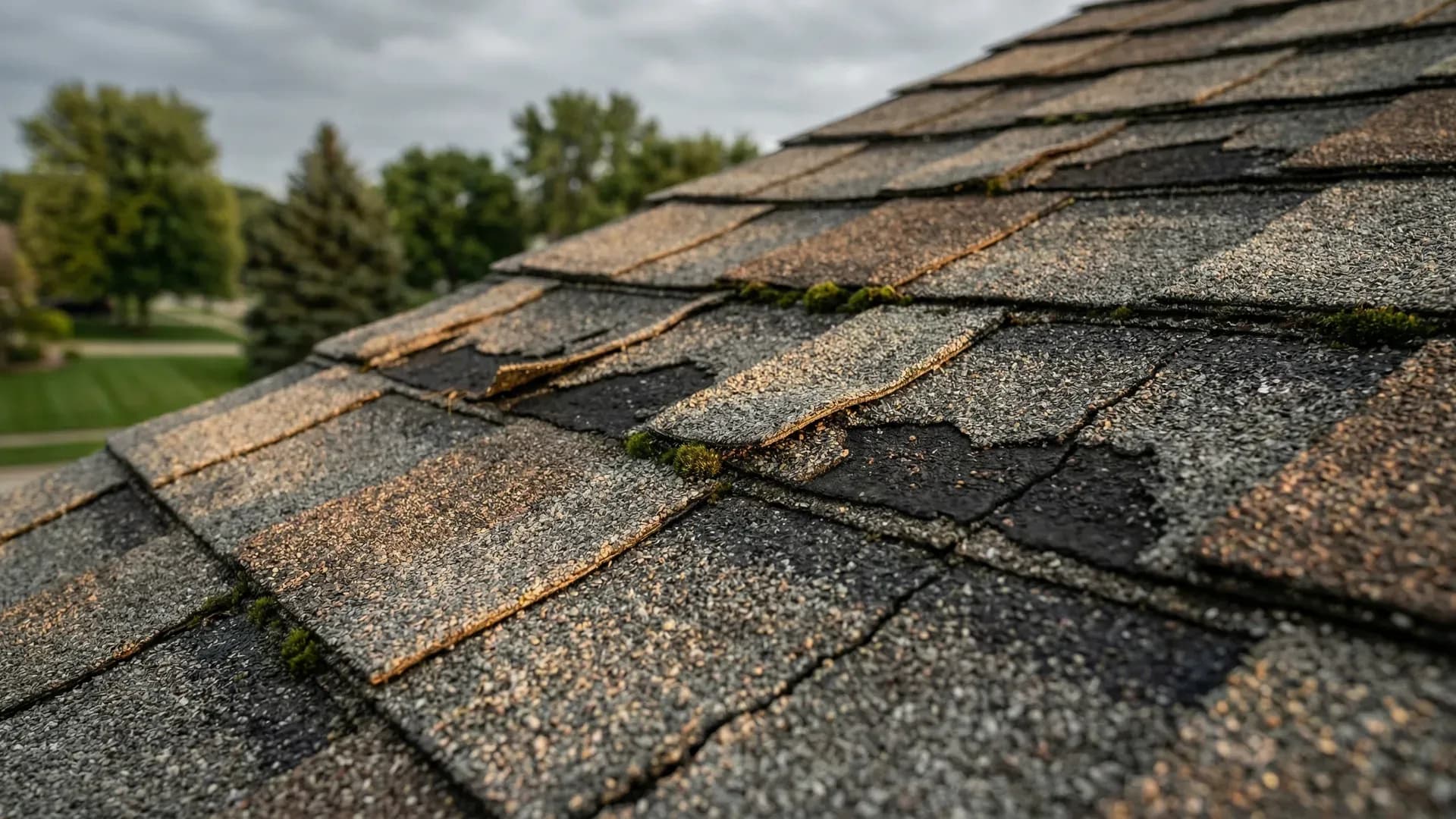
Deck condition matters too. If the plywood sheathing underneath is rotted or damaged, it needs to be replaced before new roofing goes on. Deck repairs typically run $75 to $150 per sheet of OSB or plywood. Most roofs need zero to a few sheets replaced. Badly neglected roofs might need 10 or more.
4. Roof Complexity
A simple gable roof with two flat planes is the most affordable to install. Every valley, hip, dormer, skylight, chimney, and vent pipe adds complexity. Flashing details around these features take time to get right - and getting them wrong causes leaks. Complex roofs can add 15–30% to the project cost compared to simple rooflines of the same square footage.
5. Ventilation and Code Requirements
Proper attic ventilation is critical for roof longevity in Indiana. If your current ventilation doesn't meet code or manufacturer requirements, your roofer should upgrade it during the replacement. Adding ridge vents, soffit vents, or box vents typically costs $300 to $800. Skipping proper ventilation to save money is a false economy that shortens roof life by years.
6. Underlayment and Ice & Water Shield
Indiana building code requires ice and water shield membrane along eaves, valleys, and around penetrations. Quality synthetic underlayment on the rest of the deck adds protection against wind-driven rain. Upgraded underlayment materials might add $500 to $1,500 to a project, but this is not the place to cut corners in our climate.
7. Gutters and Accessories
Many homeowners replace gutters during a roof replacement since the old ones come down anyway. New seamless aluminum gutters and downspouts typically add $1,500 to $3,500 depending on the linear footage. It's often cheaper to do them together than as a separate project later. Leaf guard installation is another common add-on.
Save Money by Bundling
Replacing gutters at the same time as your roof typically saves 10–15% versus doing them as separate projects. The scaffolding is already set up and the crew is already on-site. Ask your contractor about bundling gutters, leaf covers, or minor repairs into your roof replacement quote.
Hidden Costs to Watch For
A good contractor includes everything in their estimate. Still, it helps to know what can come up during the project.
- Permit fees: Most municipalities in our area charge $75–$200 for a roofing permit. Your contractor should handle the permit process.
- Dumpster rental: Usually included in the contractor's price. If not, expect $350–$500 for a roll-off dumpster.
- Unexpected deck damage: Rotted sheathing you can't see until the old roof comes off. Reputable contractors will call you before proceeding with any unplanned repairs and explain the cost.
- Fascia and soffit repair: Damaged fascia boards often show up during tear-off. Replacing damaged sections runs $10–$20 per linear foot.
- Chimney flashing: Rebuilding deteriorated chimney flashing is a common add-on, typically $300–$800 depending on chimney size.
How to Get an Accurate Estimate
Free estimates are standard in our industry, and you should get at least two or three before deciding. Here's how to make sure the estimates you receive are actually comparable.
- Insist on an in-person inspection. Any contractor who quotes a roof from a satellite photo alone is guessing. They need to see the deck condition, attic ventilation, and existing damage up close.
- Get line-item pricing, not just a lump sum. You should be able to see what you're paying for materials, labor, tear-off, underlayment, and permits separately.
- Verify the material spec. "Architectural shingles" covers a wide range. Ask which manufacturer and product line they're quoting. There's a real difference between a $90/square shingle and a $140/square shingle.
- Ask about warranties. Material warranties from manufacturers are separate from workmanship warranties from the installer. Both matter. Get them in writing.
- Check references specific to your roof type. If you're getting metal, ask to see recent metal installations. If you're getting shingles, same thing.
Red Flag
Be cautious of any quote that comes in dramatically below the others. Extremely low bids often mean cheaper materials, skipped steps (like proper underlayment or ventilation), or unlisted costs that surface later as change orders. Quality roofing work has real costs that don't vary as much as you'd think between reputable contractors.
Financing Your Roof Replacement
Other options worth exploring with your lender include home equity lines of credit (HELOCs), which often carry lower interest rates than personal loans. Some homeowners also roll roofing costs into a refinance if the timing works. Whatever route you choose, don't let short-term budget pressure push you into cheap materials or a questionable contractor - you'll pay more in the long run.
Insurance and Storm Damage Claims
If your roof was damaged by a storm, your homeowner's insurance may cover part or all of the replacement cost. We see a lot of hail and wind damage across northeast Indiana - it's one of the most common reasons homeowners contact us. Here's the general process.
- Document the damage with photos and notes as soon as it's safe to do so.
- Contact your insurance company to file a claim. Don't wait - many policies have time limits for filing.
- Schedule an inspection with your insurance adjuster. Having your roofing contractor present during the adjuster's visit can be helpful.
- Review the scope of the claim. Make sure the insurance estimate covers all necessary work, not just the visible damage.
- Choose your contractor. You have the right to use whichever roofing company you want - the insurance company cannot require you to use their preferred vendor.
We help homeowners navigate insurance claims regularly. It's not something you should have to figure out on your own.
When Is the Best Time to Replace a Roof in Indiana?
Late spring through early fall is peak roofing season in northeast Indiana, roughly April through October. Shingles install best in moderate temperatures - the adhesive strips seal properly when it's warm enough, and the material handles better when it's not brittle from cold. Metal can be installed year-round, though winter work is slower and weather delays are more common.
The sweet spot? Late spring and early fall. You avoid the extreme summer heat that makes roof work miserable and dangerous, and you beat the winter rush. Scheduling your project for May, September, or October can sometimes mean shorter wait times too. If your roof is actively leaking, though, don't wait for ideal weather - call immediately and we'll get it handled.
Seasonal Pricing
Roofing material prices in northeast Indiana don't fluctuate dramatically by season, but labor availability does. Booking in late winter or early spring for a spring install can sometimes get you on the schedule faster and avoid summer backlogs.
The Bottom Line on Roof Replacement Costs
The best way to get a number you can actually plan around is a free, in-person estimate from a contractor who knows the local market. Skyline Roofing Systems provides detailed, no-obligation estimates across Noble, DeKalb, Whitley, Elkhart, Kosciusko, LaGrange, and Steuben counties. We'll measure your roof, inspect the deck and ventilation, explain your options, and give you a written quote you can compare. Call (260) 205-8448 or contact us online to schedule yours.