Key Takeaways
- Most residential roof replacements take 1-3 days depending on size and complexity
- The full process from inspection to completion typically spans 2-4 weeks
- Weather delays are common in Indiana — spring and fall are the busiest seasons
- A clear project timeline from your contractor prevents surprises and sets expectations
You've signed the contract, the materials are ordered, and now you're wondering: how long is my house going to be a construction zone? It's a fair question. Nobody loves the sound of nail guns at 7 AM or having strangers on their roof for days on end. The honest answer depends on a handful of factors - but we can give you solid ballpark numbers based on what we see day in, day out across northeast Indiana.
Quick Answer
Most residential roof replacements in Indiana take 1-5 days depending on the roofing material. Asphalt shingle roofs typically take 1-3 days, standing seam metal roofs take 2-5 days, and low-slope membrane systems (TPO, EPDM) take 2-4 days. Weather delays, roof complexity, and tear-off requirements can extend these timelines.
Timeline by Roofing Material
The single biggest factor in how long your roof replacement takes is the material going on. Different roofing systems have fundamentally different installation processes, and some simply require more labor hours per square (a roofing "square" is 100 square feet) than others.
Asphalt Shingle Roofs: 1-3 Days
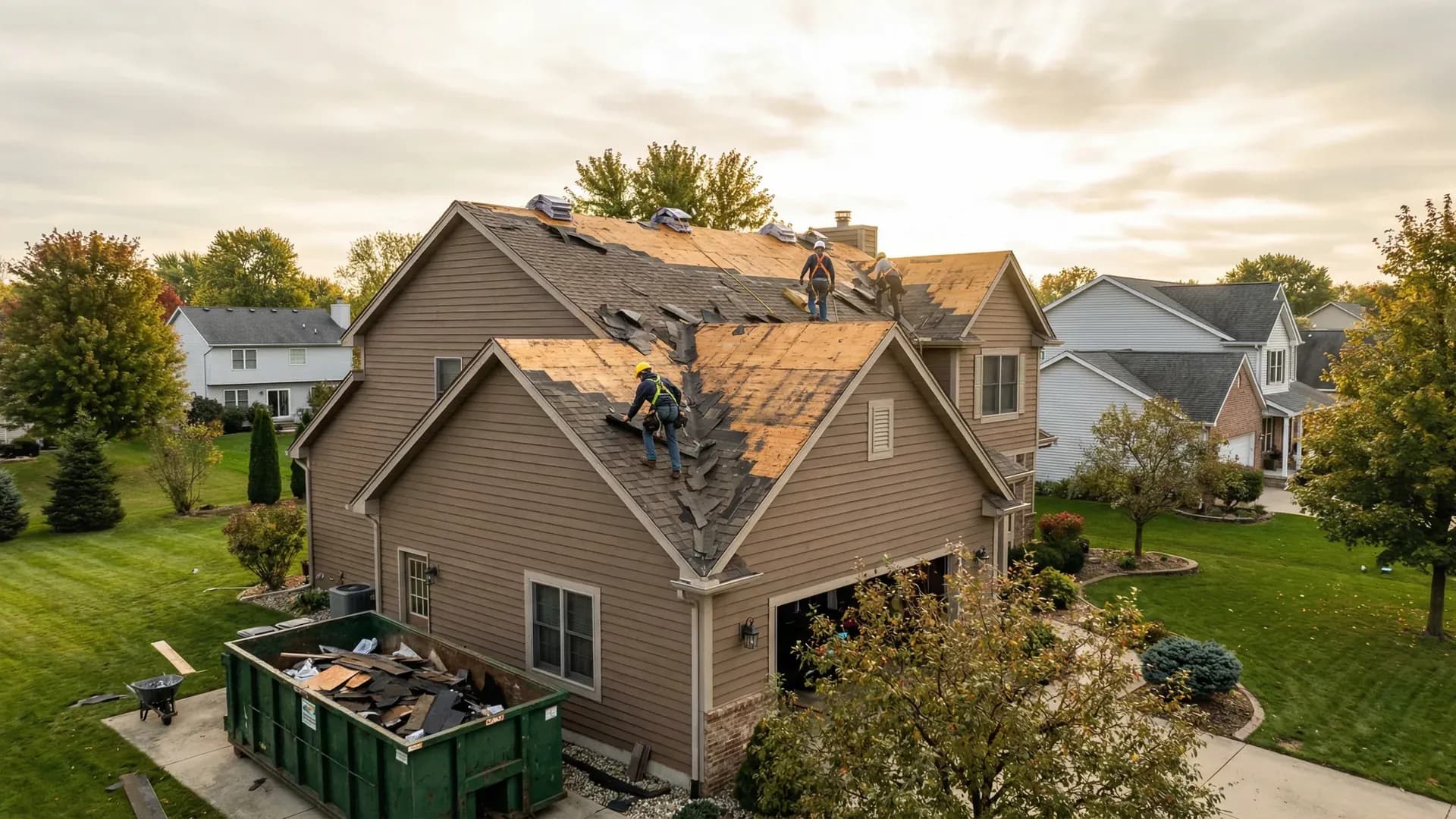
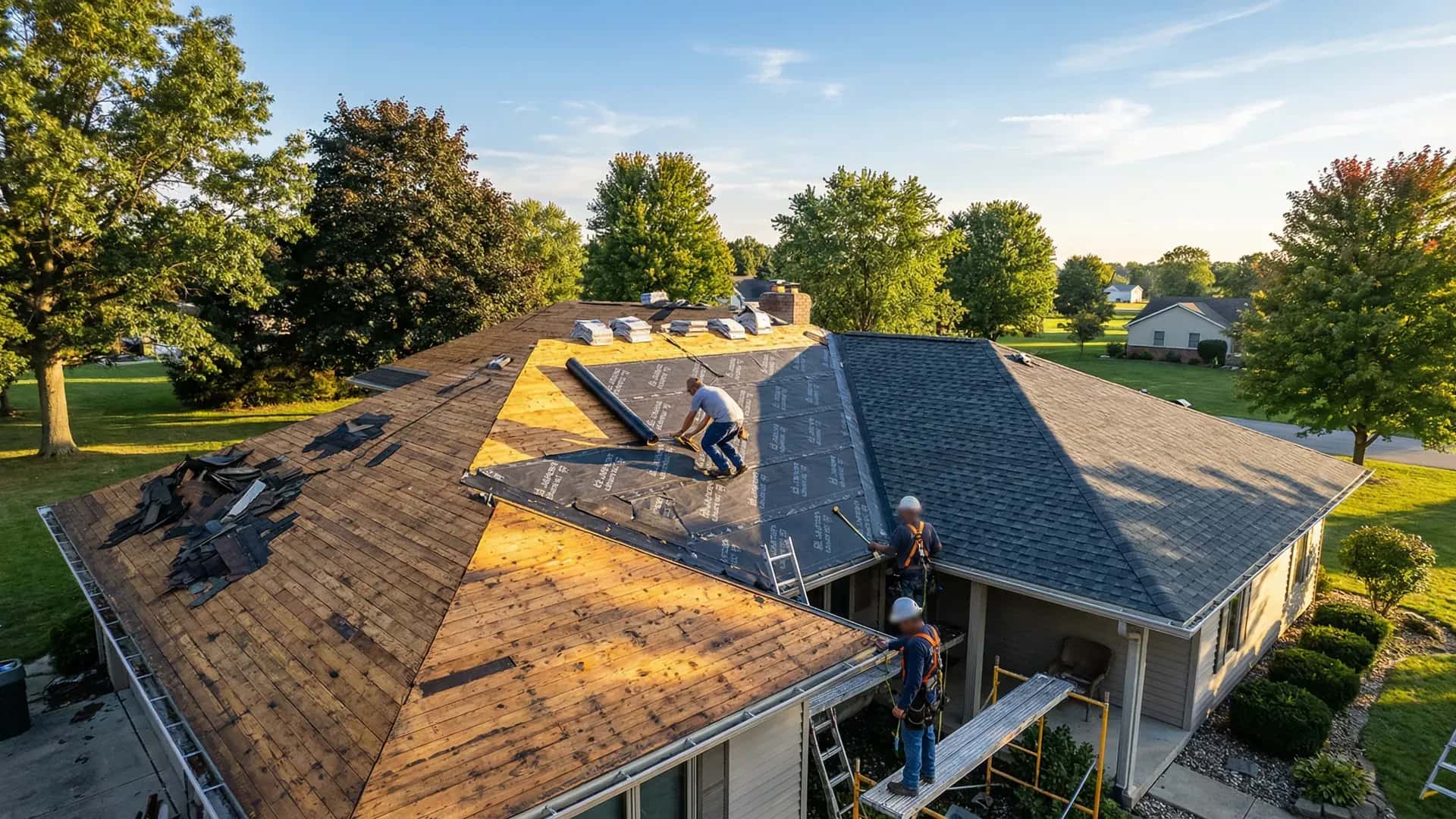
Here's what a typical shingle replacement day looks like. The crew arrives between 7 and 7:30 AM. Old shingles come off first - a process called tear-off that takes two to four hours depending on roof size and the number of existing layers. Once the deck is bare, the crew inspects the sheathing for rot or damage, replaces any compromised plywood, installs ice and water shield along the eaves, lays synthetic underlayment across the entire deck, and then starts shingling from the bottom up. By late afternoon, most of the field shingles are down. Ridge caps, vents, and final flashing details typically wrap up by end of day or early the next morning.
Standing Seam Metal Roofs: 2-5 Days
Metal roofing takes longer because each panel must be precisely measured, cut, and fastened. Standing seam systems - the kind with raised vertical seams and concealed fasteners - are especially labor-intensive compared to exposed-fastener metal panels. The panels themselves are often fabricated on-site using a portable roll-forming machine, which adds time but ensures exact fit.
A 30-square metal roof on a straightforward gable typically takes three days. Add valleys, dormers, or hip sections, and you're looking at four to five. The precision required at transitions - where panels meet walls, where valleys converge, where penetrations like pipes and vents interrupt the panel run - is where the extra time goes. These details can't be rushed without compromising the roof's weather-tightness.
Low-Slope (TPO, EPDM) Systems: 2-4 Days
Low-slope and flat roofs use membrane systems like TPO or EPDM instead of shingles or metal panels. Installation involves adhering or mechanically fastening large membrane sheets to the roof deck, then heat-welding the seams together. The welding process is where the time goes - every seam has to be carefully heated to create a watertight bond, and rushing it leads to seam failures down the road.
For commercial buildings or homes with flat roof sections, a typical TPO installation runs two to four days. Smaller residential flat sections (over a sunroom or addition, for example) can sometimes be completed in a single day. EPDM installations are slightly faster since the membrane is adhered with contact cement rather than heat-welded, but the difference is usually half a day at most.
Roof Replacement Timeline Summary
| Material | Typical Timeline | Factors That Extend It |
|---|---|---|
| Asphalt Shingles | 1-3 days | Steep pitch, large area, multiple layers to tear off |
| Standing Seam Metal | 2-5 days | Complex geometry, valleys, dormers, custom trim |
| Exposed-Fastener Metal | 1-3 days | Simpler install but still requires careful flashing work |
| TPO Membrane | 2-4 days | Large commercial areas, multiple penetrations, parapet walls |
| EPDM Membrane | 2-3 days | Similar factors as TPO, slightly faster seam process |
Factors That Affect Your Roof Replacement Timeline
Material type gives you a starting point, but several other variables can shrink or stretch the actual timeline. Here's what to expect.
Roof Size and Complexity
A simple gable roof with two planes is the fastest geometry to work with. Add hip sections, dormers, valleys, skylights, chimneys, and multiple roof levels, and the timeline grows. Each transition point - where two roof planes meet, where a dormer intersects the main roof, where flashing wraps a chimney - requires careful custom work. A 20-square ranch roof with a simple gable might take a day. A 40-square two-story Victorian with dormers, multiple valleys, and a turret? That's a three-to-four-day project regardless of material.
Tear-Off vs. Overlay
If your existing roof has one layer of shingles in decent condition, some jurisdictions allow an overlay - installing new shingles directly over the old ones. This eliminates the tear-off step and can save half a day to a full day. However, overlays have drawbacks: you can't inspect the deck underneath for rot, the added weight stresses the roof structure, and most manufacturers limit their warranty when installed over existing shingles.
If your roof already has two layers, Indiana building code requires a full tear-off. No exceptions. Tearing off two layers of old shingles takes significantly longer than one - figure an extra two to four hours for the additional layer. We recommend a full tear-off in almost every situation because it's the only way to see what's happening with the wood deck underneath, and that knowledge matters.
Weather Delays
Indiana weather is the wildcard. Once a roof is opened up - old material torn off, deck exposed - it has to be covered before rain hits. Professional crews monitor weather forecasts obsessively during roofing season and won't start a tear-off if rain is likely within the work window. But Indiana thunderstorms don't always follow the forecast. An unexpected afternoon pop-up storm can shut down work for hours or push the project to the next day.
Spring and fall are peak roofing season in our region, but they're also when weather is most unpredictable. Summer provides the longest dry windows and warmest temperatures (shingle adhesive bonds better in warm weather), but extreme heat above 95 degrees can slow crews down and make shingles too pliable to handle. Winter installations are possible but add complications - shingles won't seal properly below 40 degrees, and ice on the deck creates safety concerns.
Best Time to Schedule
For the fastest, most predictable timeline in northeast Indiana, schedule your roof replacement for late May through September. These months offer the longest daylight hours, warmest temperatures for proper material bonding, and the most consistent weather windows. If you're not in a rush, booking for early June or late August often gets you on the schedule faster than peak July.
Structural Repairs and Decking Replacement
This is the factor nobody plans for but many homeowners encounter. When the old roofing comes off and the crew finds rotted plywood, water-damaged rafters, or deteriorated fascia boards, that repair work has to happen before the new roof goes on. Decking replacement adds anywhere from a few hours (replacing two or three sheets of plywood) to a full extra day (widespread rot from long-term leaks).
There's no way to know the full extent of decking damage until tear-off is complete. A good contractor will discuss this possibility upfront and give you a per-sheet price for plywood replacement so there are no surprises. At Skyline Roofing, we price OSB and plywood decking replacement on a per-sheet basis and only charge for what's actually needed - you'll see the damaged wood before we replace it.
Permits and Inspections
Most municipalities in northeast Indiana require a building permit for a full roof replacement. The permit itself usually takes one to three business days to obtain. Some towns require a post-installation inspection, which may need to be scheduled a few days after the work is complete. Neither of these typically delays the actual installation work, but they add a few days to the overall start-to-finish timeline on paper.
The Roof Replacement Process: Day by Day
Knowing what to expect each day reduces stress. Here's a typical three-day shingle roof replacement for a mid-sized home - the most common project we do.
Before Day 1: Preparation
- Move vehicles away from the house and out of the driveway if possible
- Take down any fragile items from interior walls (vibrations from tear-off can knock things loose)
- Clear the area around your home's foundation - the crew needs perimeter access for debris cleanup
- Cover items in your attic with a tarp or sheet as a precaution against dust falling through
Day 1: Tear-Off and Deck Prep
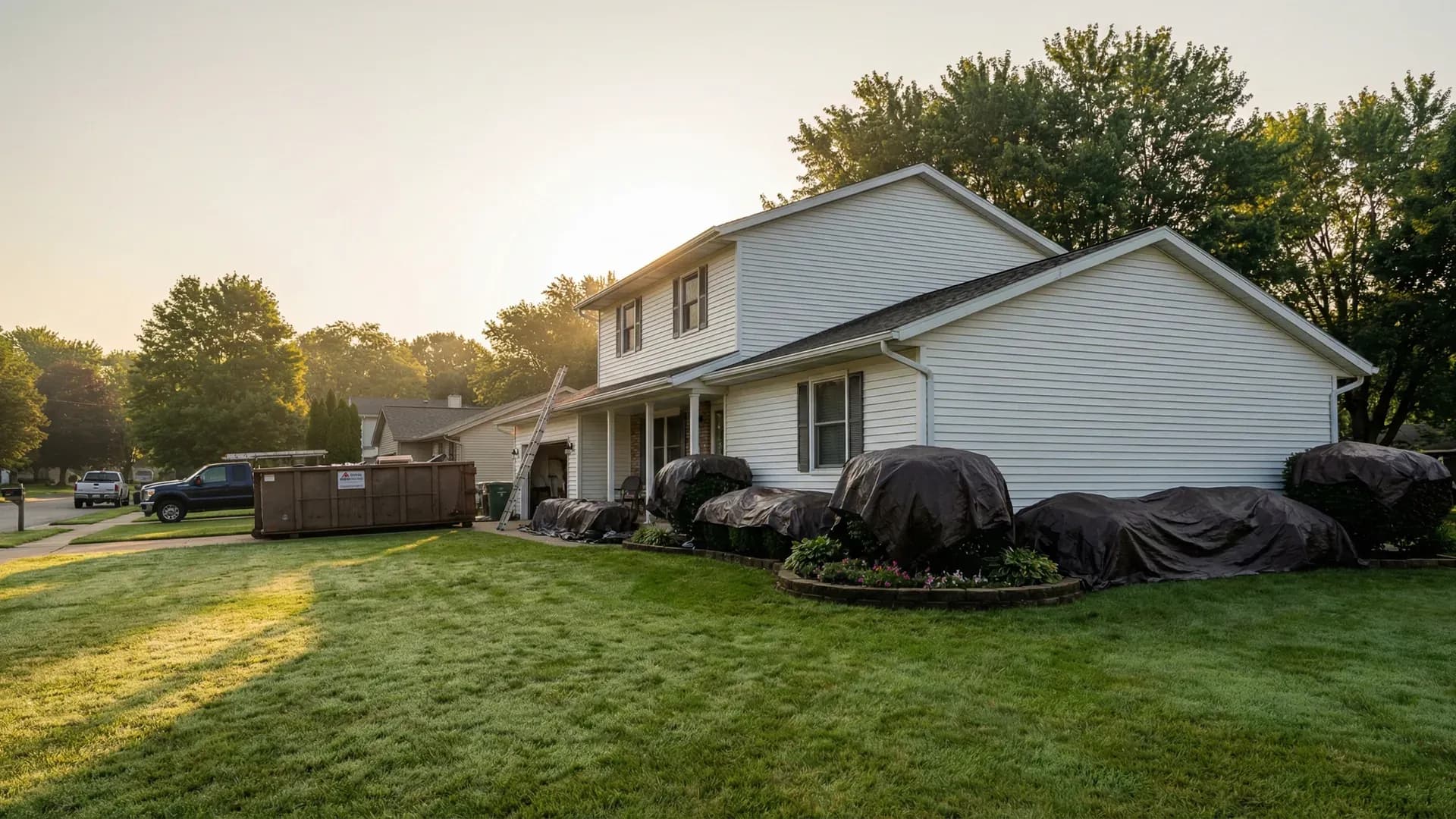
Materials are delivered the morning of installation. Crew arrives early - typically 7 to 7:30 AM. Protective tarps go down around the foundation, landscaping, and AC units. The tear-off starts with a dump trailer or dumpster already positioned in the driveway. Old shingles, underlayment, and flashing come off, get thrown into the trailer, and the deck is swept clean. The crew inspects every sheet of decking and marks any that need replacement. Damaged wood gets swapped out. Ice and water shield goes down along the eaves and in valleys. By end of day, the deck is fully prepped and protected with synthetic underlayment. If rain threatens, the underlayment serves as temporary protection overnight.
Day 2: Shingle Installation
The main installation day. Starter strip goes along the eaves, then field shingles work their way up the roof from eave to ridge. Step flashing gets woven into the shingle courses around walls, chimneys, and dormers. Pipe boots and vent flashing are installed as the shingle courses reach them. On a mid-sized home, the crew will complete most or all of the field shingle work by end of day two.
Day 3: Ridge Caps, Final Details, and Cleanup
Ridge cap shingles go along every ridge and hip. Ridge ventilation gets installed for proper attic airflow. The crew completes any remaining flashing work, seals all penetrations, and does a final quality check from the roof surface. Then comes cleanup - a magnet roller sweeps the yard, driveway, and perimeter for stray nails. Tarps are pulled. The dump trailer or dumpster gets picked up. A final walkthrough with the homeowner confirms everything looks right from the ground.
How to Prepare Your Home for Roof Replacement
A little preparation goes a long way toward keeping the project on schedule and protecting your property.
- Move vehicles out of the driveway and away from the house - falling debris and nails are a real risk
- Trim back any tree branches hanging directly over the roof to give the crew clear access
- Remove or secure loose items in the attic - the vibration from tear-off shakes things loose
- Take wall-mounted items off interior walls (especially upstairs rooms and along shared walls with the roof structure)
- Let your neighbors know - they'll appreciate a heads-up about the early-morning noise
- Make sure your contractor has clear access to electrical outlets for power tools
- Plan for pets - the noise and activity can stress animals, so consider keeping them inside or arranging alternative care for the day
- Cover pool or hot tub if it's near the house to prevent debris contamination
What Could Push Your Timeline Longer?
Knowing the potential delays upfront helps you plan realistically. Here are the most common reasons a roof replacement takes longer than expected in our area:
- Unexpected decking damage found during tear-off - rotted or delaminated plywood sheets need replacement before new roofing can be installed
- Weather interruptions - rain forces work to stop, and wet decking needs to dry before shingle installation can continue
- Material delivery delays - occasionally a specialty material (specific metal color, custom trim) doesn't arrive on schedule
- Code compliance issues - older homes sometimes need additional ventilation, drip edge, or ice barrier upgrades to meet current building code
- Chimney or skylight flashing complications - deteriorated masonry or improperly installed skylights may need additional work beyond standard re-flashing
What Skyline Roofing Commits To
We provide a projected timeline before work begins, and we communicate proactively if anything changes. Our crews work efficiently - but never at the expense of doing things right. If we discover unexpected issues during tear-off, we'll show you the problem, explain the solution, and give you an updated timeline and cost before proceeding. No surprises.
Getting on the Schedule
The scheduling lead time varies by season. During peak roofing months (May through September), expect a two-to-four-week wait between signing your contract and the crew showing up. Spring and fall shoulder seasons may be slightly shorter. Emergency tarping and temporary repairs can usually be arranged within 24-48 hours regardless of how full the schedule is.
If you're working with an insurance claim, factor in additional time for the claims process - adjuster scheduling, settlement review, and approval can add one to three weeks before work can even begin. The sooner you file your claim and get a professional inspection, the sooner you get on the schedule.