Key Takeaways
- Commercial roof replacement typically costs $9-16/sq.ft. depending on membrane type
- Signs you need replacement include ponding water, membrane bubbling, and rising energy bills
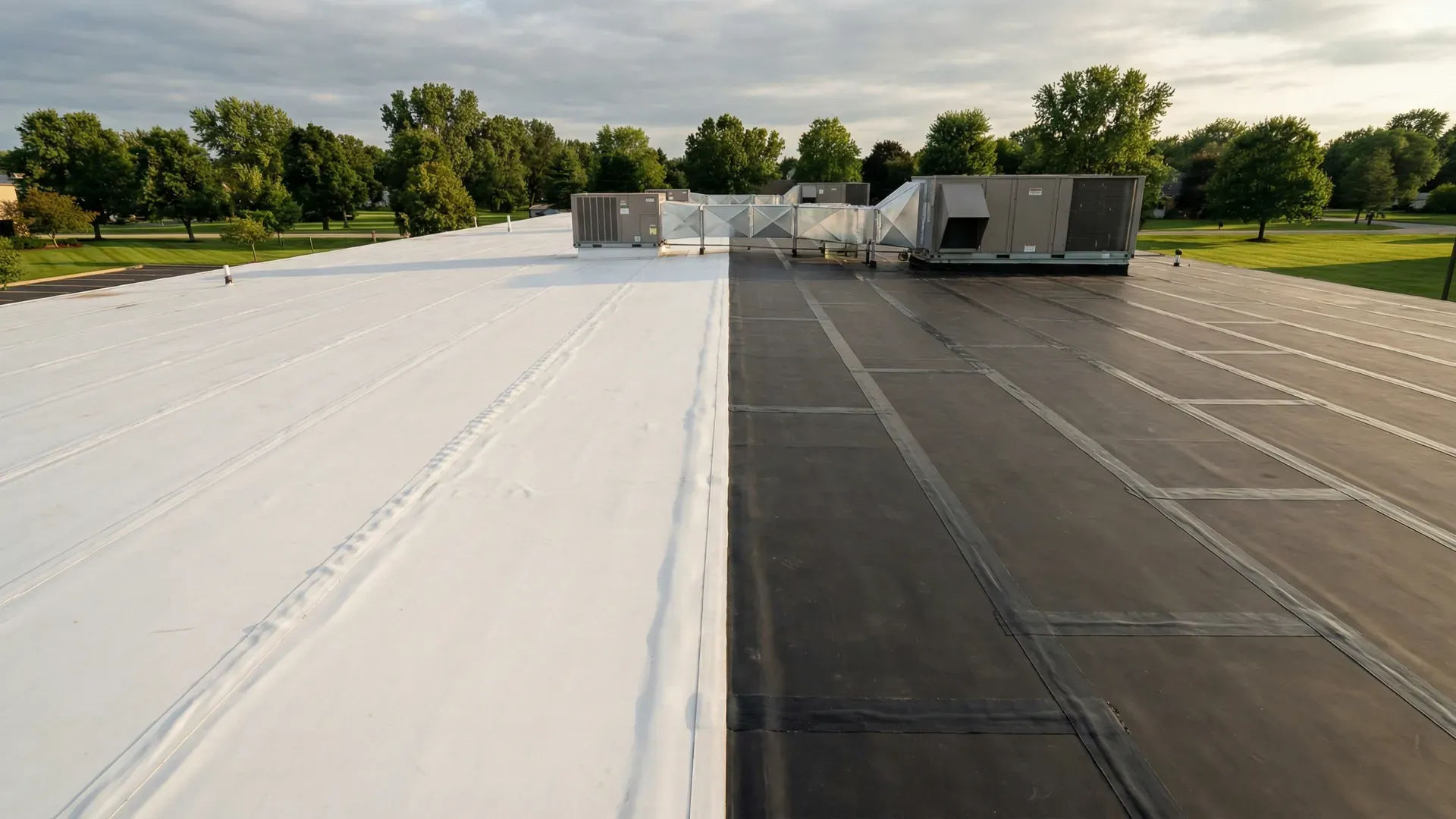
- TPO and EPDM are the two most common commercial membrane systems in Indiana
- A proper replacement includes tapered insulation for drainage and custom flashing at penetrations
Your commercial roof doesn't quit all at once. It gives you warnings - small ones at first, then bigger ones you can't ignore. A puddle that won't drain. A utility bill that jumped 15% for no clear reason. Bubbles forming under the membrane like blisters on sunburned skin. Most building owners in northeast Indiana see these signs and figure they can squeeze another year or two out of the existing roof. Sometimes that's true. Often it isn't.
The trick is knowing the difference between a roof that needs maintenance and one that's reached the end of its useful life. Getting that call wrong costs money either way - you'll overspend on a premature replacement, or you'll dump repair dollars into a system that's already past saving.
5 Signs Your Commercial Roof Needs Replacement
Commercial roofs fail differently than residential ones. There's no dramatic missing-shingle moment. Instead, the decline is gradual, and it shows up in ways that are easy to rationalize away. Here are the signals that mean it's time to start planning.
Ponding Water That Won't Drain Within 48 Hours
Standing water is the single biggest threat to flat and low-slope commercial roofs. After a rain, water should drain or evaporate within 48 hours. If it doesn't, your roof's drainage system has failed - either the slope has shifted due to structural settling, or drains and scuppers are blocked beyond simple cleaning. Persistent ponding accelerates membrane breakdown, adds hundreds of pounds of load per square foot, and eventually finds a way inside. One restaurant owner in DeKalb County told us he'd been mopping up the same corner of his kitchen for months before realizing the roof above had been holding a permanent pond since the previous winter.
Membrane Blistering, Cracking, or Pulling Away at Seams
Rising Energy Bills With No Other Explanation
A commercial roof in good condition is a major part of your building's thermal envelope. When insulation beneath the membrane gets wet - and it will once the membrane degrades - your HVAC system works harder. We've seen Indiana warehouse owners paying 20 to 30 percent more in heating costs because saturated insulation had effectively zero R-value. If your bills have crept up and your HVAC checks out fine, look up.
The Roof Is Approaching or Past Its Expected Lifespan
Different commercial roofing systems have different lifespans, and Indiana's freeze-thaw cycles shorten all of them. If your roof is within a few years of its expected end of life, proactive replacement avoids emergency situations.
Typical Commercial Roof Lifespans in Indiana
| Roof Type | Expected Lifespan | Common Failure Mode |
|---|---|---|
| TPO membrane | 20–30 years | Seam separation, UV degradation |
| EPDM (rubber) | 20–25 years | Shrinkage, seam failure |
| Built-up (BUR) | 15–25 years | Blistering, cracking between layers |
| Modified bitumen | 15–20 years | Granule loss, lap seal failure |
| Metal (standing seam) | 40–60 years | Fastener corrosion, panel shifting |
Frequent Repairs That Keep Adding Up
Here's a rule of thumb we share with our commercial clients: if you've spent more than 30% of a new roof's cost on repairs over the past three years, you're past the tipping point. Those repair dollars aren't buying you time anymore - they're just delaying the inevitable while the underlying problems spread. Track your repair invoices. The math usually makes the decision obvious.
When Is Re-Roofing vs. Full Tear-Off the Right Call?
Indiana building code allows a maximum of two roofing layers on most commercial structures. If your building already has two layers, a full tear-off is required. Even with one layer, a tear-off is often the better choice because it lets you inspect the deck, replace wet insulation, and correct drainage issues that overlay systems can't fix.
What Does Commercial Roof Replacement Cost in Indiana?
Commercial roofing costs vary widely based on roof size, material choice, building access, and the condition of the existing structure. Here's what Indiana building owners can expect in 2026.
Commercial Roof Replacement Costs (2026 Indiana Estimates)
| Roofing System | Cost Per Square Foot (Installed) | 10,000 sq ft Roof |
|---|---|---|
| TPO single-ply | $7–$12 | $70,000–$120,000 |
| EPDM single-ply | $6–$11 | $60,000–$110,000 |
| Modified bitumen | $6–$10 | $60,000–$100,000 |
| Standing seam metal | $10–$18 | $100,000–$180,000 |
| Built-up roofing (BUR) | $7–$13 | $70,000–$130,000 |
These ranges include tear-off of the existing system, insulation, the new membrane or panels, and flashing. Several factors push costs higher: rooftop HVAC units that need to be worked around, penetrations for plumbing vents and exhaust fans, parapet wall conditions, and the number of stories. A single-story retail building with good access is cheaper per square foot than a three-story office building with limited staging area.
Financing Options for Indiana Business Owners
Skyline Roofing Systems works with 3 Rivers Federal Credit Union to offer financing options for commercial roof projects. Spreading the cost over time can make replacement feasible when the alternative - continued repairs and interior damage - is actually more expensive in the long run.
How Long Does a Commercial Roof Replacement Take?
Timeline depends on roof size, material, weather, and building use. Here's a realistic breakdown for typical northeast Indiana commercial projects.
- Small retail or office (under 5,000 sq ft): 3–5 working days
- Mid-size warehouse or restaurant (5,000–15,000 sq ft): 1–3 weeks
- Large industrial or multi-unit (15,000+ sq ft): 3–6 weeks
- Weather delays: Indiana spring and fall weather can add 20–30% to timelines
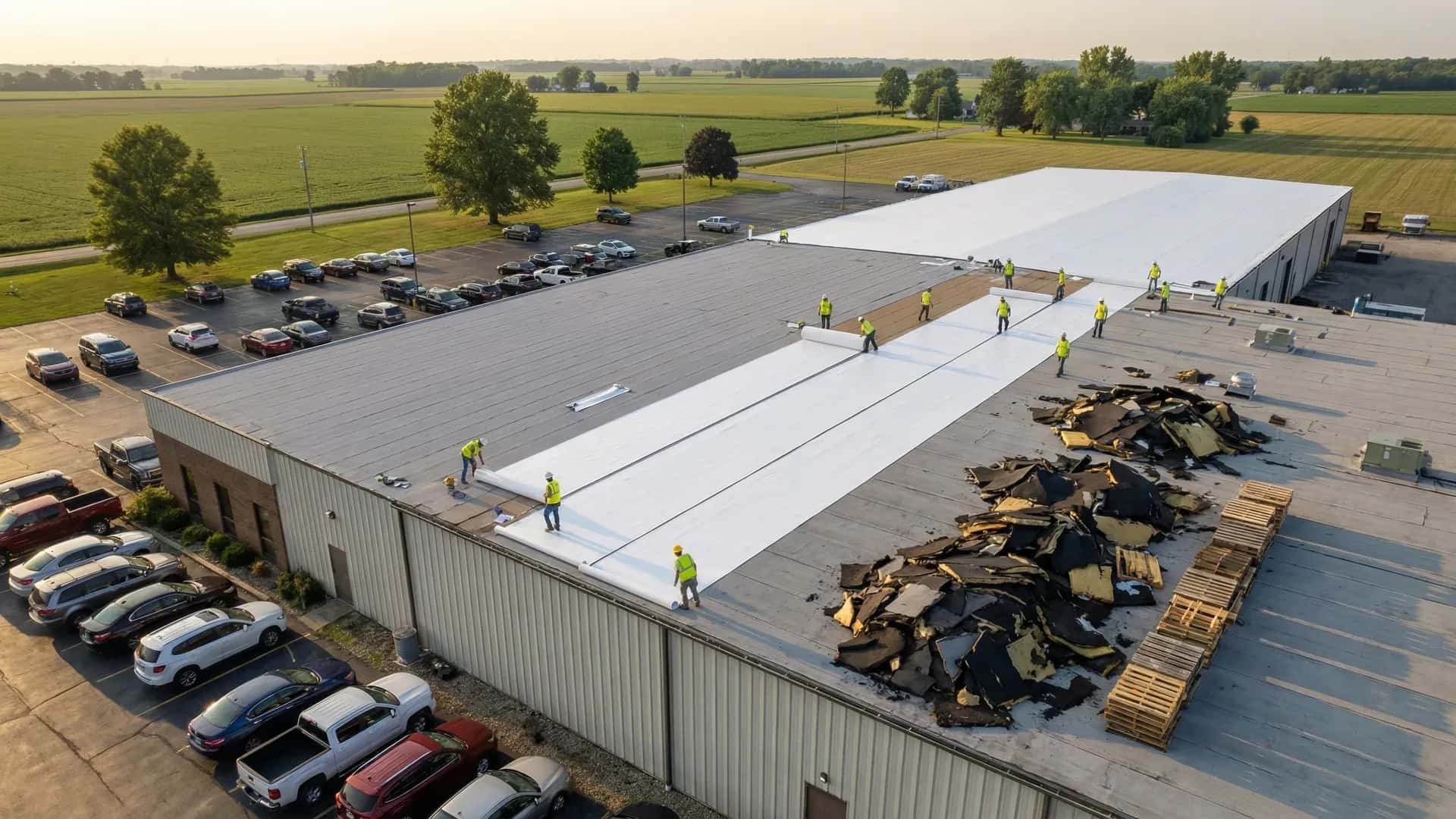
Most commercial roofing projects don't require you to close your business. We've reroofed operating restaurants, occupied office buildings, and active retail stores across Noble and DeKalb counties without shutting their doors. That said, certain phases are louder and more disruptive than others - tear-off day is the worst. Good planning and clear communication make the difference.
Minimizing Business Disruption During Replacement
Nobody wants to lose revenue while getting a new roof. Here's how smart project planning keeps your business running.
Phase the Work Strategically
On larger buildings, we divide the roof into sections and complete them sequentially. This means only a portion of the building is affected at any given time. For restaurants and retail, we can schedule the noisiest work - tear-off and decking - before or after business hours when the budget allows for off-hour labor.
Protect Inventory and Equipment
Before any work starts, we walk the interior and identify everything below the work zone that needs protection. Drop cloths, plastic sheeting, and temporary barriers keep dust and debris away from your merchandise, equipment, and customers. For warehouse operations, we coordinate with your logistics team to temporarily relocate sensitive inventory away from active work zones.
Communicate the Schedule
We provide a day-by-day schedule before the project starts so you can plan staffing, deliveries, and customer communications. If weather pushes the timeline, you'll know the same day we do. No surprises.
Choosing the Right Commercial Roofing Material
The best material depends on your building type, budget, and how long you plan to own the property. Here's how we typically advise our Indiana commercial clients.
- Restaurants and food service: TPO is popular because it resists grease and chemicals from kitchen exhaust, and its white surface helps keep cooling costs down in summer.
- Warehouses and manufacturing: EPDM handles temperature extremes well, and its lower installed cost makes sense for large square footage.
- Retail and office: TPO or standing seam metal. Both offer clean aesthetics, strong warranties, and energy efficiency that appeals to tenants and customers.
- Agricultural and pole buildings: Metal panels provide the best lifespan-to-cost ratio and handle Indiana's snow loads and wind without trouble.
The Cost of Waiting Too Long
We get it - a commercial roof replacement is a significant capital expenditure, and it's tempting to push it off another year. But the math doesn't support that decision. A failing commercial roof doesn't just leak. It saturates insulation, drives up energy costs, creates slip hazards for employees and customers, damages inventory, and exposes you to code violations. In extreme cases, a long-neglected flat roof can develop structural issues from water weight that threaten the entire building.
We've seen Indiana building owners spend $15,000 on repairs over two years, only to need a full replacement anyway - and now they also need $8,000 in interior restoration that wouldn't have been necessary if they'd replaced the roof upfront. Early action almost always saves money.
Free Commercial Roof Inspections
Skyline Roofing Systems offers free commercial roof inspections for building owners across northeast Indiana. We'll assess your roof's current condition, document problem areas with photos, and give you an honest recommendation - whether that's targeted repairs, a maintenance plan, or full replacement. Call (260) 205-8448 to schedule.
Getting Started With Your Commercial Roof Project
If you're seeing the warning signs - ponding water, membrane damage, rising utility bills, or a roof that's approaching its expiration date - don't wait for the next heavy rain to force your hand. A planned replacement is always less expensive, less disruptive, and produces a better result than an emergency one.