Key Takeaways
- Hail damage may not be visible from the ground — always get a professional inspection after storms
- Filing an insurance claim promptly is critical; most policies have time limits for storm damage
- A reputable roofer will document damage and work directly with your insurance adjuster
- Impact-resistant shingles (Class 4) can earn insurance discounts and better protect against future hail
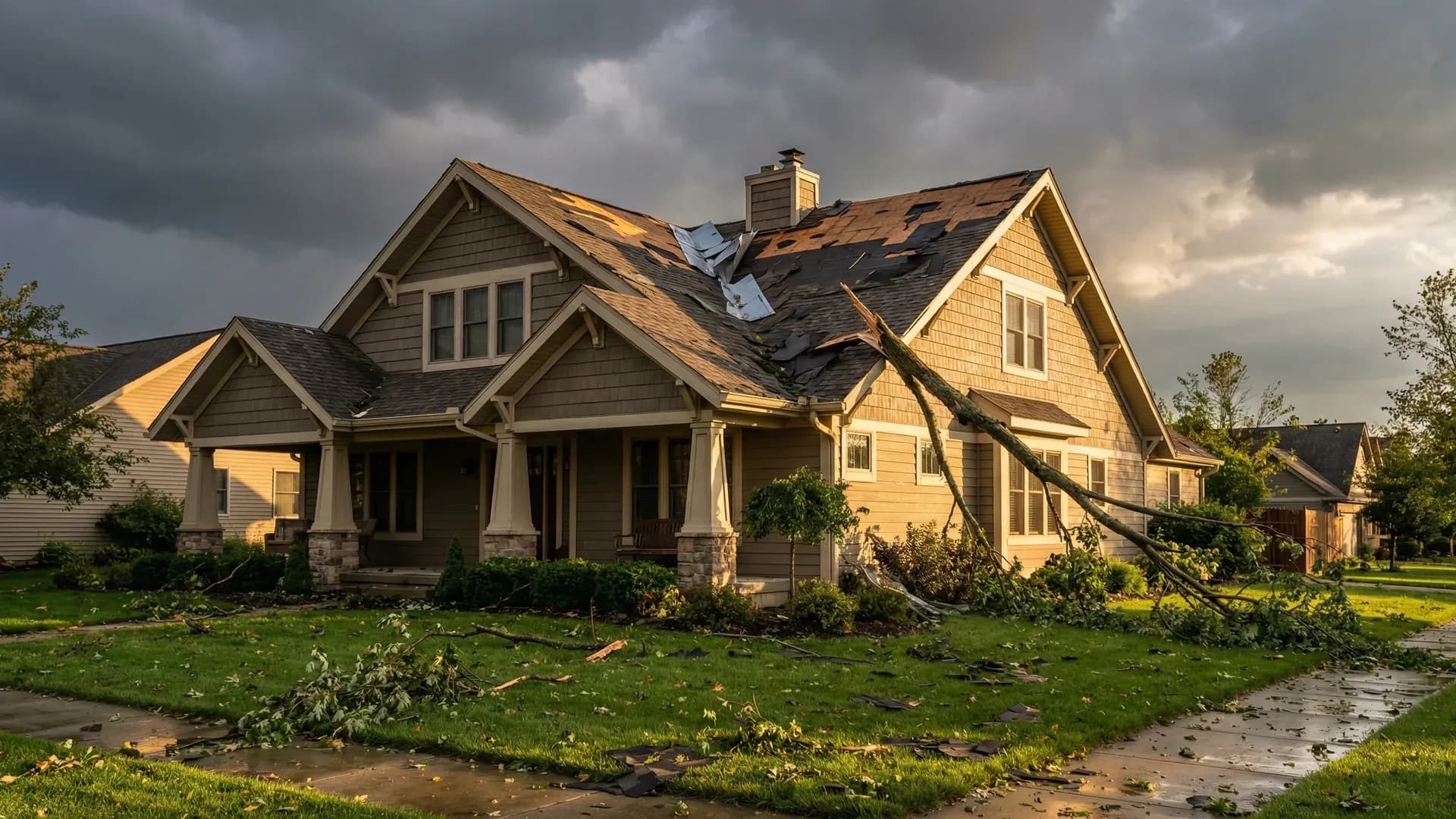
After a spring hailstorm rolls through northeast Indiana, the roofing sales trucks show up within hours. Guys in polo shirts start knocking on doors, pointing at your roof, telling you the whole thing needs to be replaced and they can handle your insurance claim. Some of them are right. A lot of them aren't.
What Hail Damage Actually Looks Like on a Roof
Hail damage has a specific signature that trained inspectors can identify. It doesn't look the same on every roofing material, but the patterns are consistent enough that insurance adjusters and experienced roofers can distinguish it from aging with confidence.
On Asphalt Shingles
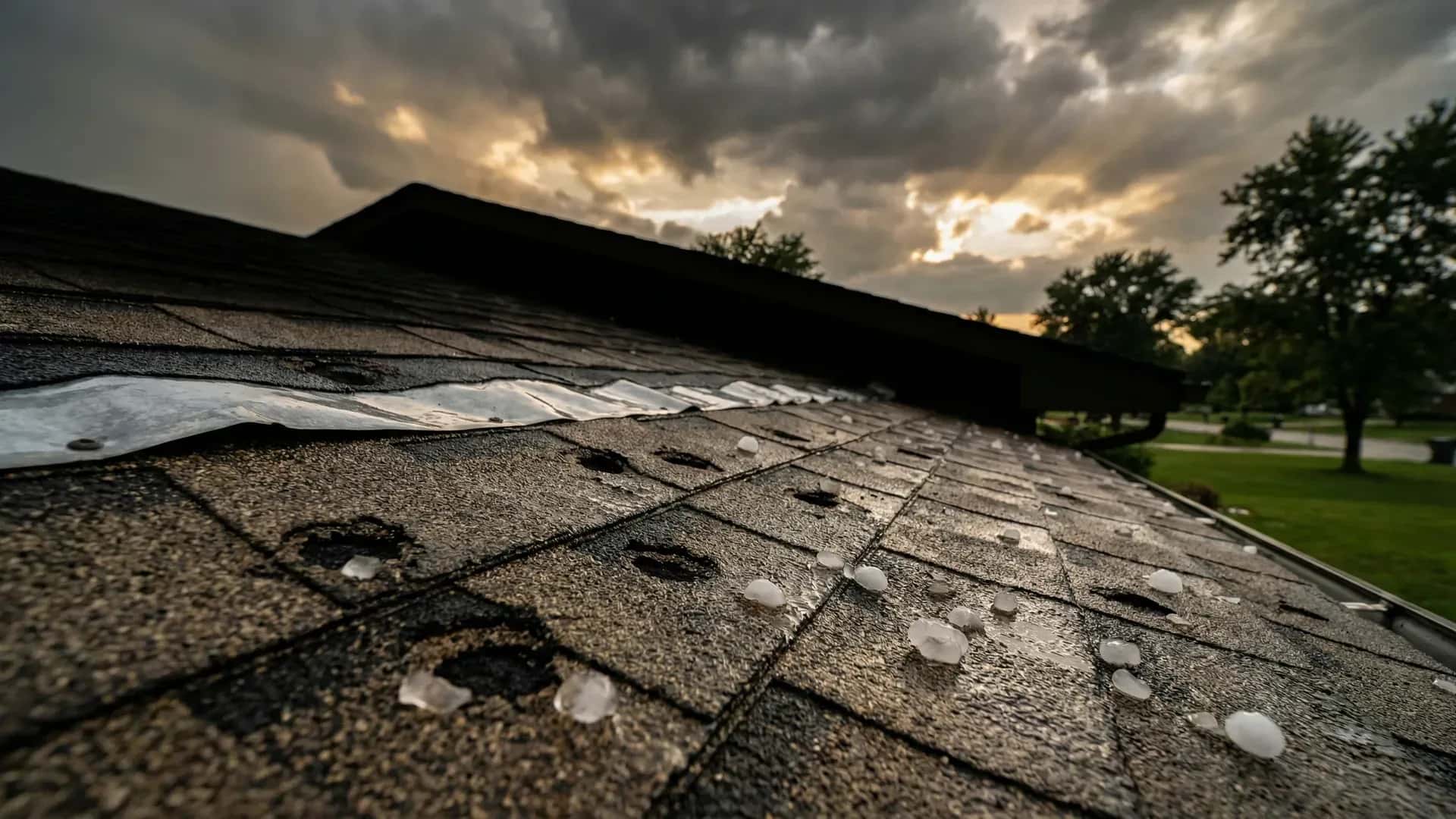
Hail hits create round or oval marks where granules have been knocked loose, exposing dark asphalt beneath. Run your hand over a hail-damaged shingle and the impact area feels soft - like a bruise on an apple. The surrounding shingle still feels firm and rough with intact granules. These impacts are randomly scattered across the roof surface rather than concentrated on edges or high-wear areas. The shingle mat itself may be fractured beneath the surface even when the damage looks cosmetic from above.
On Metal Surfaces
Check your metal flashings, vents, and gutters first - they tell the story faster than shingles. Hail leaves round dents in soft metals like aluminum and copper. The dents will be random in size and placement but consistent in shape. If your aluminum gutters have dimples but your shingles look fine, the hail was likely too small to damage the shingles. If your gutters look like someone went at them with a ball-peen hammer, your shingles almost certainly took hits too.
On Flat and Low-Slope Roofs
TPO and EPDM membranes show hail damage as circular impact marks, sometimes with small punctures or fractures in the membrane. Modified bitumen roofs lose surface granules in distinct impact patterns rather than the uniform erosion that comes from weathering. These marks are harder to spot from ground level, which is why commercial building owners often don't realize they have storm damage until the next heavy rain reveals a new leak.
How Big Does Hail Need to Be to Damage a Roof?
Hail 1 inch in diameter (quarter-sized) or larger can damage standard 3-tab shingles. Architectural shingles typically resist damage until hail reaches 1.25 to 1.5 inches. Metal roofing panels can dent from hail as small as 0.75 inches depending on gauge and profile. Wind-driven hail causes damage at smaller sizes because of increased impact velocity.
What Normal Wear Looks Like (and Why It Gets Confused With Hail)
Normal aging produces some of the same visual results as hail, which is why the confusion happens so often. Understanding the differences saves you from filing a claim that gets denied - or worse, paying for a roof you didn't actually need yet.
Granule Loss From Aging
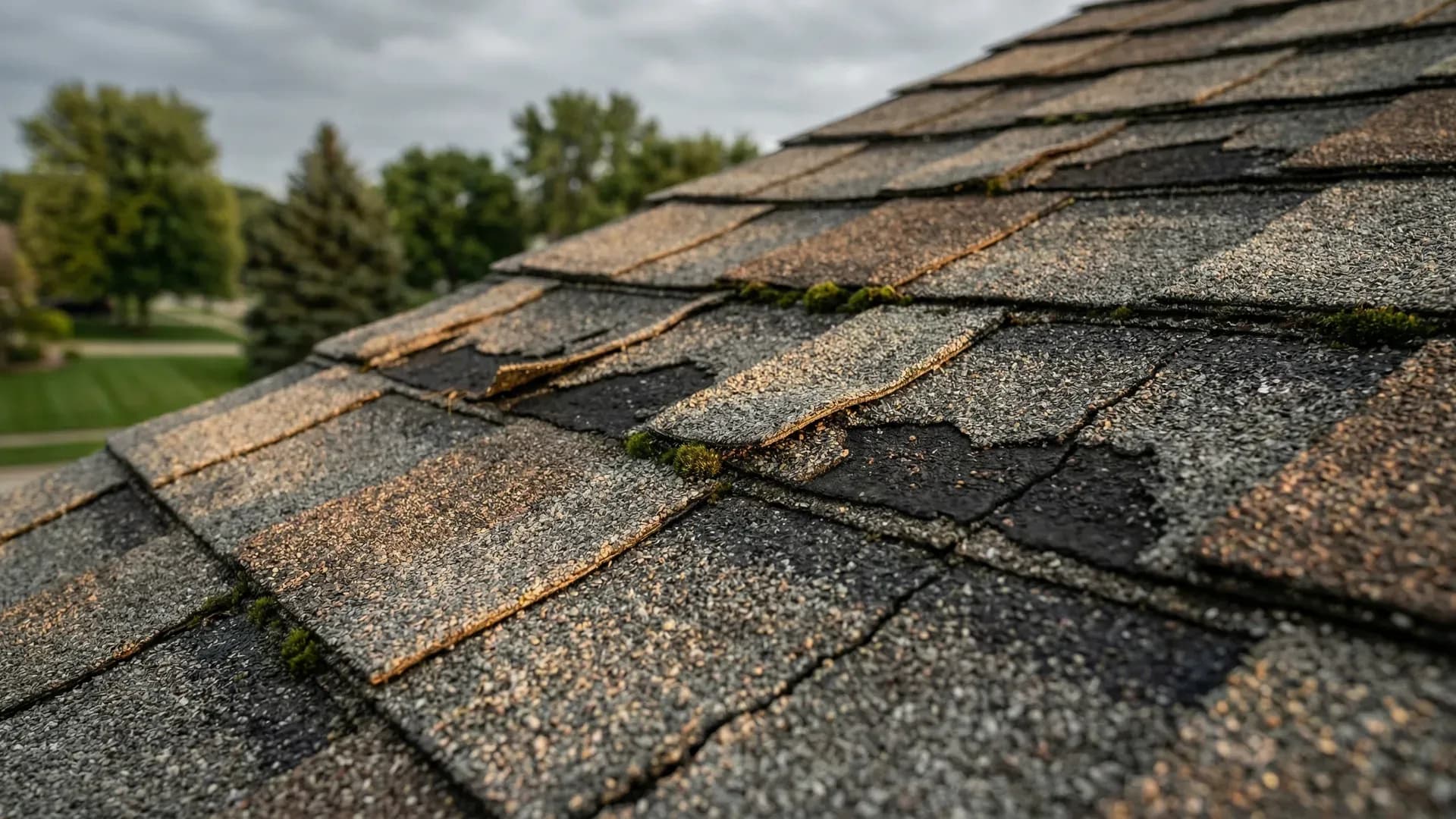
Every asphalt shingle loses granules over time. You'll see them collecting in your gutters and at the base of your downspouts. Aging-related granule loss is gradual and uniform - the entire roof surface looks slightly faded or bald, especially on south-facing slopes that take the most sun. This is different from hail, which creates concentrated bare spots in random patterns. An aging roof that's lost 40% of its granules across the board is near the end of its life, but that's a wear issue, not a storm damage issue.
Curling, Cupping, and Cracking
Shingles curl at the edges and cup in the center as they age and lose volatile oils. This is thermal cycling at work - Indiana's summers hit 95 degrees and winters drop below zero, and that constant expansion and contraction eventually breaks down the asphalt. Cracking follows the same pattern, usually appearing as long splits along the shingle tab. Hail doesn't cause curling or cracking. If you see those along with granule loss, your roof is aging out, not storm-damaged.
Blistering
Manufacturing defects or poor attic ventilation cause blisters - raised bubbles in the shingle surface where trapped moisture expanded in heat. Popped blisters look like small craters with missing granules. They're often mistaken for hail hits, but there's a key difference: blisters have irregular, rough edges where the asphalt tore open. Hail impacts are smoother and more uniform because the force came from outside pushing in, not from inside pushing out.
Hail Damage vs Normal Wear: Quick Comparison
| Feature | Hail Damage | Normal Wear |
|---|---|---|
| Granule loss pattern | Random circular bare spots | Uniform thinning across surface |
| Shingle texture at damage site | Soft, bruised feeling | Hard, brittle feeling |
| Distribution on roof | Random, all slopes affected | Worst on south/west exposures |
| Metal surface indicators | Round dents on flashing/gutters | No denting, just oxidation |
| Shingle shape | Flat (impact doesn't cause curling) | Curled edges, cupped centers |
| Timing | Appears after known storm event | Develops gradually over years |
When Repair Is Enough vs When You Need Full Replacement
Not every hail-damaged roof needs replacement. And some aging roofs that haven't seen a single hailstone absolutely do. The decision comes down to how much of the roof is affected and whether the underlying structure is still sound.
Repair Makes Sense When...
- Hail damage is limited to a small section (less than 30% of the roof area)
- The roof is less than 10 years old with plenty of life remaining
- Damage is confined to replaceable components like ridge caps, vents, or isolated shingle sections
- The roof deck and underlayment are dry and intact
- There are no pre-existing issues like poor ventilation or chronic leaks
Full Replacement Is the Right Call When...
- More than 30% of the roof surface shows hail damage across multiple slopes
- The roof was already near the end of its lifespan before the storm hit
- Hail damage combines with pre-existing wear - granule loss from both causes compounds the problem
- The roof deck shows moisture damage, sagging, or soft spots
- Insurance adjuster confirms widespread damage that meets replacement threshold
- Matching replacement shingles aren't available, creating a patchwork appearance
Watch Out for Storm-Chaser Tactics
Legitimate roofing contractors won't pressure you into signing a contract on the spot, won't ask you to sign over your insurance claim rights, and won't demand large upfront deposits before work begins. If someone knocks on your door after a storm and uses high-pressure tactics, that's a red flag. A reputable local roofer will inspect your roof, show you documented evidence of damage, and let you make the decision on your own timeline.
How Skyline Roofing Handles Hail Damage Inspections
We've inspected hundreds of roofs after Indiana storms, and we take a systematic approach. Our goal is to give you accurate information - not to sell you a roof you don't need.
- Ground-level assessment: We check gutters, downspouts, siding, and window frames for impact marks before anyone climbs a ladder. These soft metal surfaces reveal hail size and intensity faster than shingles do.
- Roof surface inspection: We walk the entire roof surface, checking all slopes and orientations. Hail driven by wind often damages one side of the roof more than the other. We mark impact locations with chalk to map the damage pattern.
- Test square evaluation: We use a 10-foot-by-10-foot test square in multiple locations to count impacts per area. Insurance companies typically require a minimum number of hits per test square to approve a claim.
- Documentation with photos: Every impact, every dent in the flashing, every damaged vent gets photographed. If you decide to file a claim, your adjuster needs this evidence.
- Honest recommendation: We tell you what we found. If you need a new roof, we'll say so and explain why. If repairs are sufficient, we'll say that instead. If the damage is purely cosmetic and your roof has 15 years of life left, we'll tell you that too.
Working With Your Insurance Company
A few things to keep in mind: most policies have a time limit for filing storm damage claims, typically one to two years from the date of the storm. Indiana law gives you the right to choose your own contractor. And you're never required to sign over your insurance benefits to a roofing company. If anyone asks you to do that, walk away.
Schedule a Post-Storm Inspection
If a hailstorm has rolled through your area - or if you're just not sure whether your roof's issues are weather damage or aging - Skyline Roofing Systems offers free inspections for homeowners across northeast Indiana. We serve Noble, DeKalb, Whitley, Elkhart, Kosciusko, LaGrange, and Steuben counties.
Give us a call at (260) 205-8448 or reach out at hmartinez@skylineroofing-systems.com. We'll get up there, take a thorough look, and give you a straight answer about what your roof actually needs.